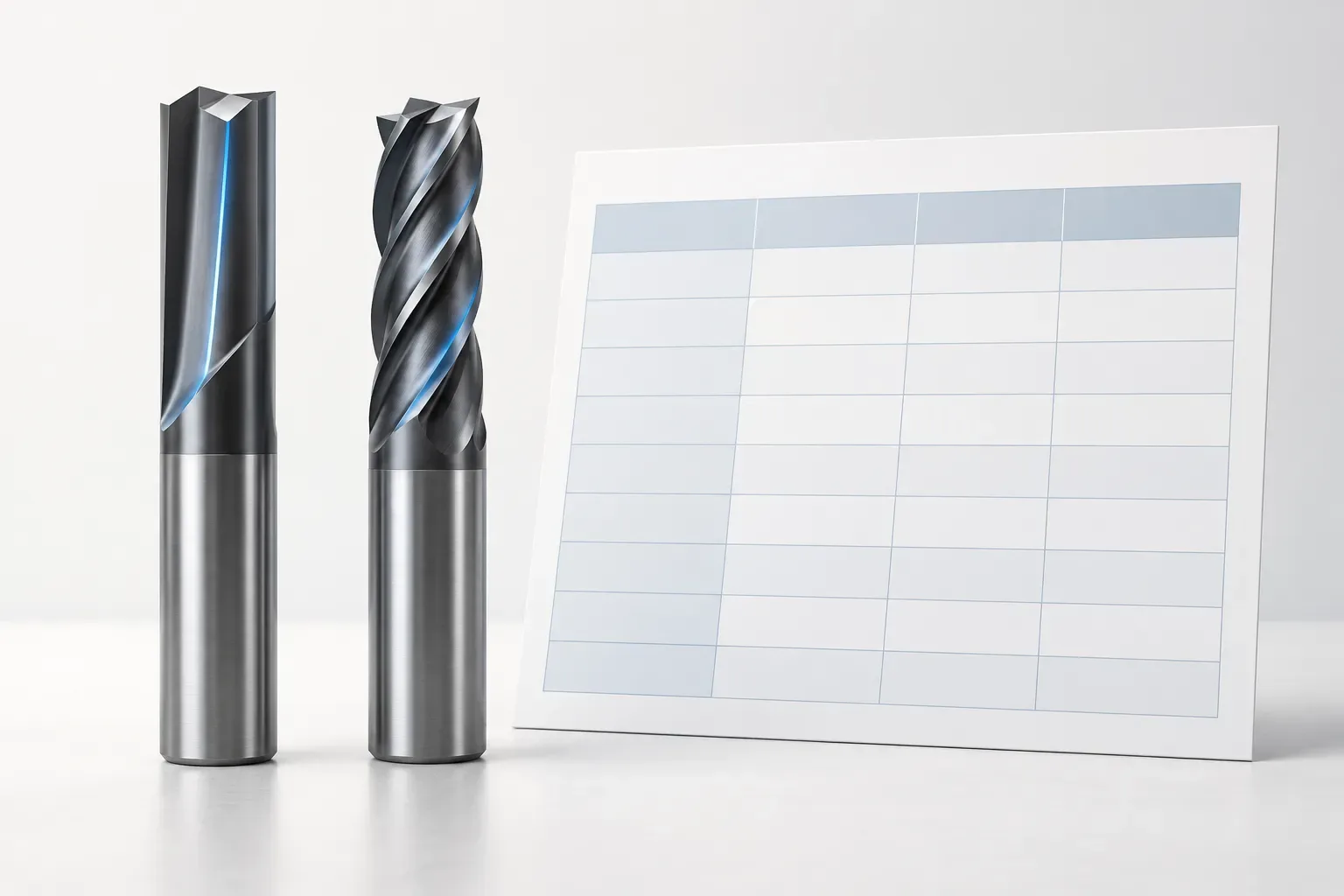
Compare carbide end mill supplier quotations only after identifying what each offer actually includes. A price comparison is not like for like when the cutters differ in diameter, radius, cutting length, shank or coating. Start with one configuration record, then separate exact matches, proposed alternatives and unresolved fields before reviewing commercial terms.
This guide is a purchasing method, not a supplier ranking or a price forecast. It uses two documented cutters to illustrate a controlled comparison. No approved sale price, minimum order quantity, stock level or delivery promise is supplied here. Those terms need to be stated for the actual quotation and quantity being considered.
Define the comparison baseline
Record the required end profile, cutting diameter, cutting length, overall length, shank diameter and form, flute count and coating. Include the intended workpiece and feature. If the request is for a replacement, preserve the incumbent tool's complete known specification rather than shortening it to a diameter and material label.
State which fields are mandatory and which may be proposed as alternatives. This does not mean a nominally similar cutter is approved; it tells the supplier which changes can be discussed. Keep the proposed product and any application recommendation connected to the same configuration throughout the exchange.
Use the product facts to expose a coating difference
The DLC-coated half-inch three-flute radius cutter lists a 0.5 inch cutting diameter, 0.5 inch smooth shank, 1.25 inch cutting length, 3 inch overall length and 0.12 inch corner radius. Its primary workpiece group is aluminum.
The uncoated half-inch three-flute radius cutter records those same principal dimensions, three flutes, a smooth shank and aluminum as primary group. Its coating field is uncoated rather than DLC. This creates a useful comparison example because the coating change remains visible instead of being hidden behind a similar title.
The matching fields do not establish identical unlisted substrate, tolerances or edge preparation. Nor do the records supply a comparative cutting result. If coating equivalence or a qualified material specification matters, request supporting documentation rather than accepting a shared size as complete proof of equivalence.
Build a quotation matrix with separate columns
Put each proposed configuration in its own row. Use separate columns for product identity, geometry, coating, quantity, included items and commercial conditions. Mark missing information as unresolved in the buying record; do not copy a value from another row simply to produce a complete-looking comparison.
A matrix should show whether an offer concerns the exact requested cutter or an alternative. If a supplier proposes a longer cutting region, another shank or a different corner radius, that proposal may require application and holder review. It should not enter the comparison as an unchanged replacement.
Ask for commercial terms tied to the selected quantity
Request the quoted currency, amount, quantity basis and any stated order threshold. Ask whether packaging, documentation, freight or other items are included where those details matter to the transaction. Do not infer a per-tool cost from a package amount before confirming what quantity and components the package contains.
Delivery information should relate to the specific order rather than a broad website statement. If an offer changes when quantity changes, keep the applicable quantity with that offer. This guide supplies no default price or order threshold because neither has been established for a particular purchase.
Keep application review separate from price ranking
The lowest stated amount does not resolve whether a configuration matches the part and assembly. Review the documented workpiece group, feature requirements, holder interface and any required technical information before treating the offers as interchangeable candidates.
If a supplier provides cutting advice, identify the exact tool and conditions addressed. A catalogue coating label does not justify a tool-life multiplier or a guaranteed finish. Where a process change requires a trial or qualification, record that requirement independently instead of describing the quotation itself as proof of performance.
Save the selected offer and any accepted changes
Use the milling tools catalogue to identify documented configurations, then save the final quote with its configuration baseline. Record accepted alternatives clearly so the ordered tool is not confused with the first candidate mentioned in the enquiry.
Before issuing an order, check the final geometry, coating, quantity and included scope together. Resolve outstanding technical and commercial questions with the responsible parties. A sound supplier comparison ends with an identifiable item and a traceable set of terms, not just a column of amounts attached to products that may differ in important ways.
Frequently asked questions
Are matching diameter and flute count enough for comparison?
No. Check corner geometry, lengths, shank, coating, application and the included quotation scope.
Do the example records prove DLC and uncoated are equivalent?
No. They identify shared principal dimensions and a coating difference, without proving identical unlisted details or performance.
Does this guide provide a default price or MOQ?
No. Request approved commercial terms for the actual configuration and quantity.